
Rigor in Admission
Rigor of secondary school record
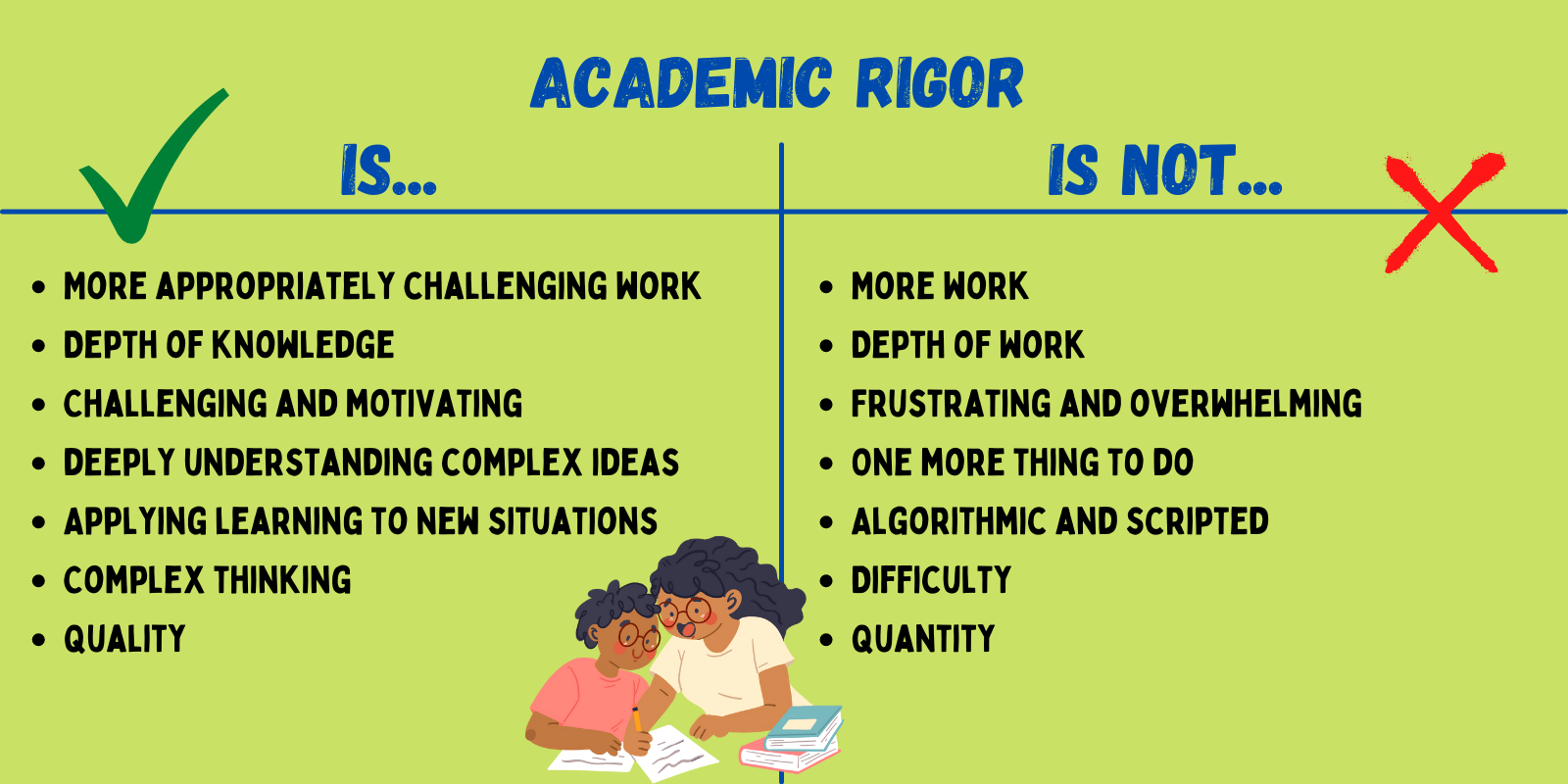
Academic Rigor: What It Means and Why It Matters
Academic rigor refers to the intellectual challenge of your coursework. It's not about a single class but the combination of courses on your transcript. Colleges want students who push themselves beyond the bare minimum, demonstrating willingness to step outside their comfort zone and tackle demanding material. Since college coursework is more demanding than high school, showing that you can handle rigorous courses signals readiness.
Rigor vs. GPA: Striking the Right Balance
Ideally, you'd maintain both a high GPA and challenging coursework. In reality, a balance is more achievable and more valued than perfection in either dimension alone. A 3.4 GPA with two or three AP courses can be just as impressive as a 3.8 in standard classes — colleges examine both the numbers and the context behind them.
A practical approach to balancing rigor and grades:
- Enroll in challenging courses (AP, honors, IB, dual enrollment) in core subjects like math, science, English, history, and foreign language.
- Distribute advanced courses across sophomore, junior, and senior years to avoid burnout.
- Avoid AP courses in subjects where you historically struggle — take them in your areas of strength instead.
- Don't sacrifice meaningful extracurriculars solely to add more AP classes. The strongest applicants show depth beyond academics.
How Colleges Evaluate Your Transcript
Your transcript tells a story about effort, ambition, and growth. Admissions officers evaluate several components:
- GPA (weighted and unweighted): Unweighted GPA shows raw academic performance on a 4.0 scale. Weighted GPA reflects the difficulty of your courses. A strong unweighted GPA in rigorous courses often looks better than a high weighted GPA in less demanding ones.
- Course progression and rigor: Are you taking increasingly challenging courses each year? An upward trajectory shows intellectual curiosity and maturity.
- Class rank: Where available, class rank contextualizes your GPA within your school's competitive environment.
- Grade trends: An upward trend (improving grades over four years) tells a powerful story of growth, resilience, and determination — sometimes more compelling than consistently high marks.
- Context: Admissions officers consider what was available at your school. If your school offers 20 AP courses and you took none, that's a concern. If it offers 3 and you took all 3, that's impressive.
Types of Advanced Coursework
- AP (Advanced Placement): College-level courses with standardized exams. Scores of 4 or 5 may earn college credit. Most selective colleges expect applicants to have completed several AP courses.
- IB (International Baccalaureate): A comprehensive diploma program emphasizing global perspective, critical thinking, and extended research. The full IB diploma is highly respected.
- Honors courses: More rigorous than standard classes but typically below AP/IB level. They demonstrate willingness to challenge yourself.
- Dual enrollment: Taking college courses while in high school, often at a local community college. Demonstrates readiness for college-level work and can earn transferable credits.
The Impact of Course Difficulty on GPA
Many schools calculate weighted GPAs that award extra points for advanced courses (e.g., an A in an AP class = 5.0 instead of 4.0). However, not all colleges recalculate GPAs the same way. Some selective schools strip weighting and recalculate using their own formulas. This means your actual performance in challenging courses matters more than the weighted number on your transcript.
If your GPA dips slightly because you took harder courses, don't panic. Admissions officers understand that a B in AP Chemistry demonstrates more than an A in a standard science elective. The key is maintaining a strong overall record while showing you embraced available challenges.
STEM Courses in High School
STEM fields (science, technology, engineering, math) are projected to have rapid job growth, encompassing careers in biotech, software development, medicine, data science, and more. Building a strong STEM foundation in high school is essential if you plan to pursue these fields in college. Benefits of high school STEM coursework include:
- Problem-solving skills: STEM courses teach you to analyze problems systematically, generate hypotheses, test theories, and evaluate results.
- Communication and collaboration: Lab work and group projects develop presentation skills, teamwork, and the ability to explain complex ideas clearly.
- Confidence and resilience: The trial-and-error nature of STEM builds grit, adaptability, and comfort with learning from mistakes.
- College and career readiness: STEM courses encourage independent, self-paced work — skills essential for success in higher education and the workforce.
Preparing a Strong Transcript
Think of your transcript as your academic resume. To make it as strong as possible:
- Take the most challenging courses available to you that you can handle well.
- Show progression — don't plateau. Each year should demonstrate growth.
- Maintain consistency across subjects rather than excelling in one area while neglecting others.
- If you had a bad semester, show recovery. Colleges love a comeback story.
- Choose courses that align with your intended major or stated interests — this demonstrates focus and authenticity.
Rigor Examples by School Type
Admissions officers evaluate rigor in context — what counts as "rigorous" depends on what your school offers. Here's what strong rigor looks like across different school types:
Public Schools (Large)
- Take advantage of the full AP/honors catalog. Large public schools often offer 15–25 AP courses. Taking 5–8 across your junior and senior years shows strong commitment.
- Dual enrollment at a local community college can supplement areas where your school lacks advanced options.
- If your school offers an IB program, the full IB diploma is considered extremely rigorous.
Magnet and Exam Schools
- These schools often have accelerated curricula that exceed standard AP rigor. Admissions officers are familiar with top magnet programs and calibrate expectations accordingly.
- Taking the most challenging track available — even if it means a slightly lower GPA — is expected at these schools.
- Research courses, independent studies, and capstone projects carry significant weight.
Private and Independent Schools
- Some private schools don't label courses "AP" but offer equivalent or harder coursework. Admissions officers review the school profile to understand this.
- Taking the highest level offered in core subjects (often called "Advanced" or "Accelerated") is the expectation.
- Smaller class sizes mean teachers can provide detailed recommendations that contextualize your transcript.
Rural and Small Schools
- Limited AP offerings are common — if your school offers only 3–5 AP courses, taking all or most of them demonstrates maximum effort.
- Supplement with online AP courses, dual enrollment at nearby colleges, or self-study for AP exams.
- Admissions officers use the school profile (sent with your transcript) to understand what was available to you. Taking everything your school offers matters more than the total number of advanced courses.
AP vs. Honors Decision Framework
Choosing between AP and Honors courses is a common dilemma. Use this framework to make smart decisions:
Take AP When:
- The subject aligns with your strengths or intended major.
- You consistently earn A's or high B's in honors-level courses in that subject.
- You're genuinely interested in the material — motivation sustains performance in demanding courses.
- You want the opportunity to earn college credit and potentially save tuition.
- Your schedule can absorb the additional homework and exam prep without sacrificing sleep or activities.
Stay in Honors When:
- You're already stretched thin with other AP courses — quality over quantity matters.
- The subject is a persistent weakness and a B in Honors serves you better than a C in AP.
- Taking another AP would force you to drop a meaningful extracurricular or leadership role.
- Your school's honors courses are genuinely rigorous and well-regarded (some schools' honors courses approach AP difficulty).
- You need to maintain a strong GPA for scholarship eligibility thresholds.
General Guidance
Most competitive college applicants take 4–8 AP courses across high school, concentrated in junior and senior years. However, there is no magic number. A thoughtful selection of AP courses where you perform well is far more impressive than loading up on APs with mediocre grades. Talk to your counselor about what's realistic given your full schedule and goals.
Humanities vs. STEM Rigor
Students often wonder whether AP Physics "counts more" than AP Literature in admissions. The short answer: both matter, and balanced rigor across disciplines signals intellectual curiosity and readiness for college-level work.
How Admissions Views Different APs
Selective colleges want to see that you challenged yourself across the curriculum, not just in your comfort zone. A STEM-focused student who avoids all humanities APs — or a humanities student who never takes a rigorous math or science course — may raise questions about intellectual breadth. Admissions officers understand that AP Physics C and AP English Literature require different skills, and they value both.
- STEM courses (AP Calculus, Physics, Chemistry, Computer Science) demonstrate quantitative reasoning and problem-solving ability
- Humanities courses (AP Literature, History, Government, Languages) demonstrate critical thinking, writing ability, and cultural awareness
- Cross-disciplinary picks (AP Environmental Science, AP Psychology, AP Statistics) show versatility
The ideal transcript shows strength in your intended area of study plus meaningful engagement with other disciplines. An aspiring engineer who excels in AP Literature stands out more than one who only takes STEM APs.
Time Management for Rigorous Course Loads
Taking 5 or more AP/IB courses simultaneously is common among competitive applicants, but it requires intentional planning to avoid burnout and grade drops. Here are practical strategies:
Planning Your Schedule
- Stagger difficulty: Don't put all your hardest courses in the same semester. Balance a heavy STEM load with a lighter humanities course or vice versa.
- Consider your extracurriculars: If you have a demanding activity season (fall sports, spring musical), plan lighter academic loads during those periods when possible.
- Talk to upperclassmen: Students who have already taken specific AP courses at your school can give realistic time estimates and teacher-specific advice.
Daily and Weekly Habits
- Use a planner or digital calendar to track all deadlines across courses — avoid the "everything is due Thursday" surprise
- Study in focused blocks (25–50 minutes) with short breaks rather than marathon sessions
- Front-load reading and long-term assignments — don't leave AP History DBQs or lab reports to the night before
- Form study groups for difficult subjects — teaching concepts to others reinforces your own understanding
- Prioritize sleep — research consistently shows that well-rested students perform better on exams and retain more information
Remember: a rigorous schedule with strong grades is the goal. If adding one more AP course would drop your GPA, it's not worth it. Admissions officers would rather see five APs with A's than seven APs with B's and C's.
References:
- What's Academic Rigor? Why is it So Important? - College Raptor
- College Application: What is rigor? Do I have enough rigor?
- What Your High School Academic Record Says About You
- College Admissions Advisors Answer Questions on “Rigor” for High School Students
- Rigor: What it means for college admissions (and how to get it)
- GPA vs. Course Rigor In College Admissions
- How Much Does Course Rigor Matter for College Admissions?
- High Grades vs. Challenging Courses
- Academic Rigor and the AP Dilemma
- The Rigor Of Your Curriculum: What Level Of Difficulty Is Enough?
- Is Your High School Academic Record Good Enough for Top College Admission?
- Academic Rigor Advice from Experts
- Course Rigor vs GPA - What’s Really Important?
- GPA, Class Rank and Academic Rigor
- Stand Out to Admissions: How to Increase Rigor in Your Course Schedule
- A Rigorous High School Curriculum - What Exactly Does That Mean?
- College-Bound Student’s Top Advice: Pay Attention To Course Rigor
- Research Shows Course Rigor Tops in College Admissions
- GPA vs Rigor … What do You Need for a College Admission?
- What Does a Rigorous High School Course Load Look Like?
- RIGOROUS HIGH SCHOOL CURRICULUMS
- Do college admissions care about AP scores as much as they do about SAT scores or GPA?
- The Best High School Classes for Future STEM Majors
- Should I Focus on Getting a STEM-Specific Education in High School?
- Why Should You Consider STEM Courses in High School for Your Child?