
Award Letters
Award Letter Analyzer Tool
Select colleges to review and compare offer letters and award packages side by side.
Award Letter
Understanding Your Financial Aid Award Letter
After being accepted to college, you'll receive a financial aid award letter (also called a College Financing Plan) from each school. This letter outlines the cost of attendance and the financial aid being offered. Understanding these letters — and knowing how to compare them — is one of the most important financial decisions you'll make.
What's in an Award Letter
Award letters typically include several key components:
- Cost of Attendance (COA): The total estimated cost for one year, including tuition, fees, room, board, books, transportation, and personal expenses. This is the "sticker price" before aid.
- Student Aid Index (SAI): The amount your family is expected to pay, calculated from your FAFSA. The difference between COA and SAI represents your "financial need."
- Gift aid (free money): Grants (federal, state, institutional) and scholarships that don't need to be repaid.
- Self-help aid: Federal work-study (part-time campus employment) and loans (money that must be repaid with interest).
- Net price: COA minus all gift aid — this is what you'll actually pay out of pocket or through loans.
Common Problems in Award Letters
Not all award letters are created equal. Watch for these issues:
- Mixing gift aid with loans: Some letters present loans as "awards," making the package look more generous than it is. Always separate free money from money you must repay.
- Missing costs: Some letters omit living expenses, books, or transportation. Make sure you're seeing the full COA.
- One-year vs. four-year aid: Most letters only guarantee one year. Ask whether aid is renewable and under what conditions (GPA, continued need).
- Parent PLUS loans: Some schools include Parent PLUS loans in the package, but these require a separate application and credit check — they're not guaranteed aid.
How Financial Aid Is Determined
Schools use information from your FAFSA (and sometimes the CSS Profile) to calculate your financial need. Need-based aid fills the gap between COA and SAI. Merit-based aid is awarded for academic achievement, talent, or other qualities regardless of financial need. Most students receive a combination of both.
Schools have different aid philosophies: some commit to meeting 100% of demonstrated need, while others may "gap" students (leaving unmet need that must be covered by loans or family resources).
Comparing Award Letters
To compare offers fairly, focus on net price (COA minus gift aid) rather than the total package amount. Create a spreadsheet with these columns for each school:
- Total COA (including all living expenses)
- Total gift aid (grants + scholarships)
- Net price (COA minus gift aid)
- Total loans offered
- Work-study amount
- Remaining out-of-pocket cost
The school with the largest total aid package isn't necessarily the best deal — a school with a lower COA and less aid may still cost you less.
Questions to Ask Financial Aid Offices
- Is this aid package renewable for all four years? What conditions must I meet?
- What happens to my aid if my family's financial situation changes?
- Are there additional scholarships I can apply for?
- What is the average debt at graduation for students at this school?
- Can I appeal for more aid? What documentation do you need?
- What percentage of demonstrated need does the school typically meet?
When and How to Appeal
You can (and should) appeal your financial aid offer if:
- Your family has experienced a significant change in financial circumstances (job loss, medical expenses, divorce, death of a wage earner).
- You have a competing offer from a comparable school with significantly more aid.
- There are special circumstances not captured on the FAFSA (caring for elderly relatives, private school tuition for siblings, etc.).
Need-based appeals require documentation of changed circumstances — tax returns, termination letters, medical bills. Merit-based appeals require evidence of competing offers or updated achievements (higher test scores, new awards).
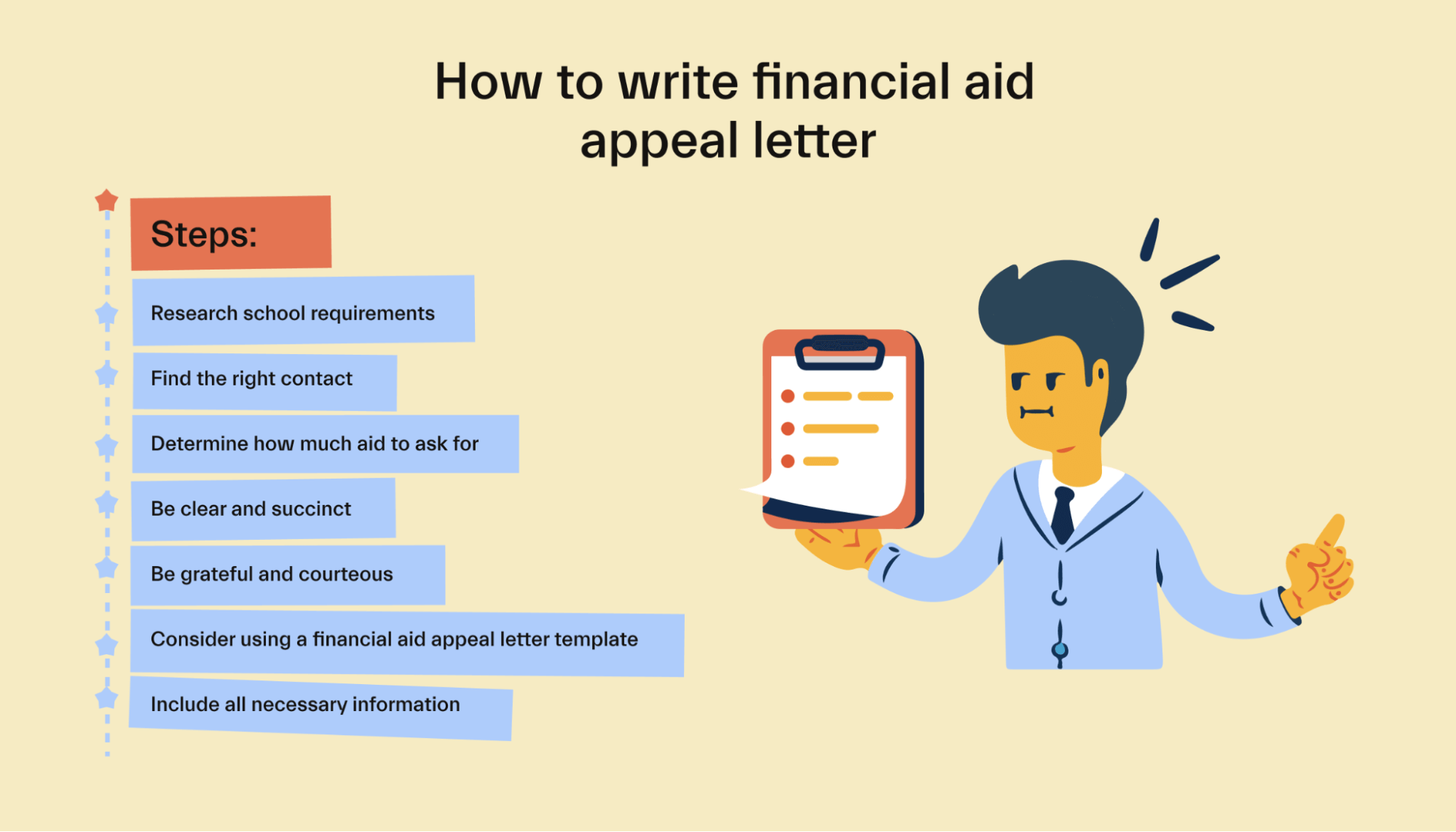
Writing an Effective Appeal Letter
- Be polite, specific, and concise. Express gratitude for the offer before requesting reconsideration.
- Clearly explain the circumstances that warrant additional aid and provide supporting documentation.
- If referencing a competing offer, mention the specific school and the net price difference.
- State your strong interest in attending — schools are more likely to negotiate with students they believe will enroll.
- Follow the school's specific appeal process and deadlines.
Making Your Final Decision
After gathering all information and completing any appeals, make your decision based on the total four-year cost (not just freshman year), the school's graduation rate, post-graduation employment outcomes, and your personal fit. A school that costs slightly more but leads to significantly better career outcomes may be worth the investment — but borrowing excessively for prestige alone is rarely wise.
Remember: you must respond to all schools by May 1 (National College Decision Day). Accept one offer, decline the rest, and submit your enrollment deposit.
Multi-Year Cost Projection
Award letters typically show costs for one year only, but college is a four-year (or longer) commitment. Projecting total costs helps you make a truly informed decision:
- Tuition increases: Most schools raise tuition 3–5% annually. A school charging $40,000 in tuition today may charge $42,000–$45,000 by senior year. Over four years, a 4% annual increase adds roughly $10,000 to your total cost.
- Room and board increases: Housing and meal plan costs also rise annually, typically 2–4%. Off-campus rent may increase even faster in competitive markets.
- Aid may not keep pace: While many schools adjust grant aid annually, increases may not match tuition hikes. Ask each school whether your grant aid is expected to increase proportionally.
- Four-year projection formula: Take your Year 1 net price and multiply by 4.2–4.3 to approximate total four-year cost (accounting for annual increases). A $25,000 net price in Year 1 likely means $105,000–$108,000 total — not $100,000.
- Scholarship renewal risks: Some merit scholarships require maintaining a 3.0 or 3.5 GPA. If your GPA dips, you could lose thousands in aid. Ask what percentage of students retain their scholarships through graduation.
Understanding Parent PLUS Loans
Parent PLUS loans are federal loans that parents of dependent undergraduate students can borrow to cover any remaining college costs not met by other financial aid. Many award letters include PLUS loans as part of the financial aid package, but they work very differently from student loans:
- Credit check required: Unlike student federal loans, PLUS loans require a credit check. Parents with adverse credit history may be denied, though they can appeal or obtain an endorser.
- Higher interest rate: PLUS loans carry a 9.08% fixed rate (2024–25), compared to 6.53% for undergraduate Direct Loans. A $30,000 PLUS loan at 9.08% accrues roughly $2,700 in interest per year.
- No borrowing limit: Parents can borrow up to the full cost of attendance minus other aid. This flexibility can lead to over-borrowing if not carefully managed.
- Repayment begins immediately: Unlike student loans, PLUS loan repayment starts within 60 days of disbursement (though deferment while the student is enrolled is available upon request).
- Parent liability: PLUS loans are the parent's legal responsibility — not the student's. If a parent defaults, it affects the parent's credit score and can lead to wage garnishment.
- Income-driven repayment: PLUS loans are eligible for Income-Contingent Repayment (ICR) if consolidated into a Direct Consolidation Loan. PSLF forgiveness is also available for qualifying employment.
Related resources: Understanding your award letter starts with understanding how your aid eligibility is calculated. See our SAI/EFC Guide to learn how your Student Aid Index is determined, and our FAFSA & CSS Profile Guide for step-by-step filing instructions.
References:
- Award Letter Basics
- How to Appeal a Financial Aid Award Letter
- How to Appeal for More Financial Aid for College
- How to Write a Financial Aid Appeal Letter -- NerdWallet
- How to Appeal Financial Aid to Get More Money
- Can You Appeal Your Financial Aid Award?
- 3 Tips for Financial Aid Appeals
- 7 Strategies for Appealing a College Financial Aid Package
- How to Write a Financial Aid Appeal Letter
- Appealing Financial Aid and Merit Scholarships
- Financial Aid Review Process
- The 2022 Complete Guide To Aid Appeal
- How To Appeal Your Financial Aid Package
- 8 Smart Steps to Appeal for More College Financial Aid
- How to appeal your financial aid award letter
- Appeal for Financial Aid Reinstatement Instructions
- How to Read Your Financial Aid Award Letter -- CollegeAve
- How to Read Your Student Aid Offer Letter: 5 Examples
- Award Letters
- How To Understand Financial Aid Award Letters
- How to Read a Financial Aid Award Letter
- How to Read Your Financial Aid Award Letter -- US News
- Making Sense of Your Financial Aid Award Letter: What do the numbers mean?
- Understanding Your Financial Aid Award Letter -- Investopedia
- How to Read and Evaluate Your Financial Aid Letter
- Understanding your financial aid award letter -- PayingForCollege
- Financial Aid Award Letter and How to Read It
- Understanding Your Award Letter Worksheet
- How to Read a Financial Aid Award Letter [With 2 Examples]
- How to Evaluate College Financial Aid Award Letters
- Comparing School Financial Aid Offers
- Understanding the Award Letter
- Understanding your student financial aid award letter
- How to Read a Financial Aid Award Letter (With Examples)
- What Your Award Letter Is Really Telling You
- How to read your financial aid award letter -- BankRate
- How to Read Your Financial Aid Award Letter -- Earnest
- Understanding Your Financial Aid Award Letter -- AcademicInfo
- Understanding Your Award Letter & Micro-Scholarships
- Financial Aid Award Letters: Questions to Ask Your College
- How to Compare and Contrast Offer Letters from Different Colleges
- Choosing a College after Multiple Acceptance Offers
- Comparing Your Financial Aid Offers
- How to Compare Your College Financial Aid Award Packages
- OfferLetterDECODER