
General Application
General Application Information
Access comprehensive college profiles for additional information.

What Colleges Expect and Look For
Colleges evaluate applicants holistically. Academic performance is the foundation — GPA, course rigor, and standardized test scores (where required) demonstrate your readiness for college-level work. But admissions committees also look for intellectual curiosity, personal character, community involvement, and the potential to contribute to campus life.
Beyond grades, they want to see consistency and growth in your transcript, meaningful extracurricular engagement (depth over breadth), strong recommendation letters that reveal character, and thoughtful essays that show genuine self-reflection. Demonstrated interest — campus visits, information sessions, and direct contact with admissions — matters at many schools.
How Colleges Evaluate Your Transcript
Admissions officers read transcripts in context: the rigor of courses offered at your school, grade trends over four years, and performance in core academic subjects. An upward trend can offset a weaker freshman year. Schools also consider your course load relative to what's available — choosing AP or honors courses when accessible signals academic ambition.

Weighted vs. Unweighted GPA
An unweighted GPA uses a standard 4.0 scale where all classes count equally. A weighted GPA assigns extra points for honors, AP, and IB courses — typically on a 5.0 scale. A student earning an A in AP Chemistry might receive a 5.0 weighted vs. 4.0 unweighted.
Selective colleges often recalculate GPAs using their own formulas, focusing on core academic courses and course rigor. Some prefer unweighted GPA because it's standardized; others appreciate weighted GPA for reflecting academic challenge. Either way, admissions officers see your full transcript and evaluate it in context. Focus on taking the most challenging courses you can handle while maintaining strong grades.

Class Rank
Class rank shows where you stand relative to your peers. Some schools rank by exact number (e.g., 15 out of 450), while others use deciles or quartiles. Many high schools have dropped formal ranking because it can disadvantage students at highly competitive schools.
When rank is available, it provides admissions officers quick context about your performance within your specific academic environment. At schools without formal rank, admissions committees rely more heavily on GPA, course rigor, and school profile information. Top 10% rank (or equivalent standing) can qualify students for automatic admission at some state universities, particularly in Texas and California.

Choosing a College Major
You don't need to have a major decided before applying — many students enter as "undecided" and declare later. However, if you have a strong interest, applying with a specific major can strengthen your application when your extracurriculars and essays align with that field.
Consider employability, your genuine interests, and long-term career options. Research whether the school is known for your intended major, whether it's a limited-enrollment program (nursing, engineering, business), and whether switching majors later is feasible. Liberal arts educations emphasize flexibility, while pre-professional programs offer focused training.

The Counselor's Role
Your high school counselor is a critical partner in the college application process. They write the school report and counselor recommendation, send your transcript, and provide context about your school's academic environment to admissions committees. Build a relationship early — don't wait until senior year.
Counselors can help you identify colleges that match your profile, meet deadlines, navigate financial aid, and advocate on your behalf. If your school has a high student-to-counselor ratio, take initiative: schedule meetings, prepare questions in advance, and keep them informed about your activities and goals.

Priority Deadlines
A priority deadline is an earlier application date that gives you first consideration for admissions decisions, financial aid, housing, and merit scholarships. Unlike binding Early Decision deadlines, priority deadlines are non-binding and carry no commitment. Missing a priority deadline usually doesn't disqualify you, but it may reduce your chances for limited resources.
Common priority deadlines fall between November and February. Each school sets its own dates, so track them carefully. Submitting by the priority deadline is especially important for merit-based scholarships, which are often awarded on a first-come, first-served basis.
Rolling Admission and Direct Program Admission
Rolling admission means colleges review applications as they arrive and issue decisions continuously, rather than all at once. Applying early in the cycle increases your chances since seats fill progressively. Some rolling schools still have priority dates for financial aid and housing.
Direct program admission grants freshmen entry into competitive programs (nursing, engineering, business, honors) from the start, bypassing the need to apply internally after freshman year. Criteria are typically higher than general admission: stronger GPAs, test scores, and sometimes supplemental essays or portfolios. Not all schools offer this, and availability varies by program.
Admission Requirements Overview
While specific requirements vary, most colleges expect: a completed application form (Common App, Coalition App, or institutional), official transcripts, standardized test scores (at test-required schools), recommendation letters, and personal essays. Many also request a school report and counselor recommendation. Selective programs may require interviews, portfolios, or auditions.
Test-optional policies have expanded significantly — check each school's current policy. Regardless of testing policy, strong grades in rigorous courses remain the most influential factor in admissions decisions at most institutions.

Public vs. Private Colleges
Public universities are state-funded and offer lower tuition for in-state residents. They tend to be larger, with more program options and research opportunities. Out-of-state tuition can rival private school costs.
Private colleges set their own tuition regardless of residency. While sticker prices are higher, they often have larger endowments and more generous institutional aid — meaning the net cost after aid may be comparable to or lower than public schools. Private colleges tend to have smaller class sizes and more personalized advising.
The right choice depends on your financial situation, desired experience, and specific programs. Compare net cost (not sticker price) to make an honest assessment.

Liberal Arts Colleges
Liberal arts colleges emphasize broad undergraduate education across humanities, social sciences, and natural sciences. They prioritize critical thinking, communication, and interdisciplinary learning over narrow job training. Class sizes are small, faculty-student relationships are close, and teaching (not research) is often the primary faculty mission.
Graduates develop versatile skills valued across industries. Many liberal arts college alumni go on to graduate and professional schools at high rates. These schools are ideal for students who want to explore multiple interests before specializing.
College Location and Campus Setting
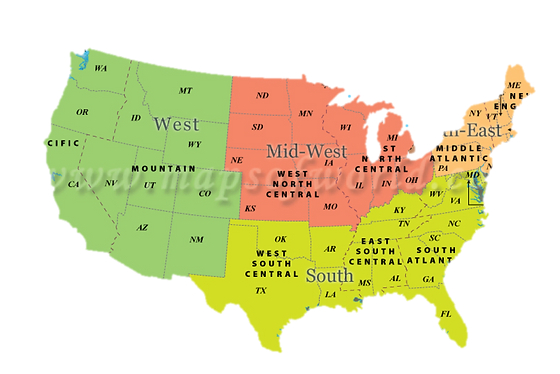
Location matters more than many students realize. Consider distance from home, regional job markets, climate preferences, and cost of living. A school in a major city offers internship access and cultural diversity; a rural campus may provide a more focused, close-knit experience.
Urban campuses offer proximity to employers, public transit, cultural institutions, and diverse dining and entertainment options. Suburban campuses provide a quieter environment with access to city amenities. Rural campuses offer natural settings, strong community bonds, and often lower cost of living. Geographic diversity also plays a role in admissions — attending school in a different region can be viewed favorably and broadens your network.
Independent vs. Dependent Students
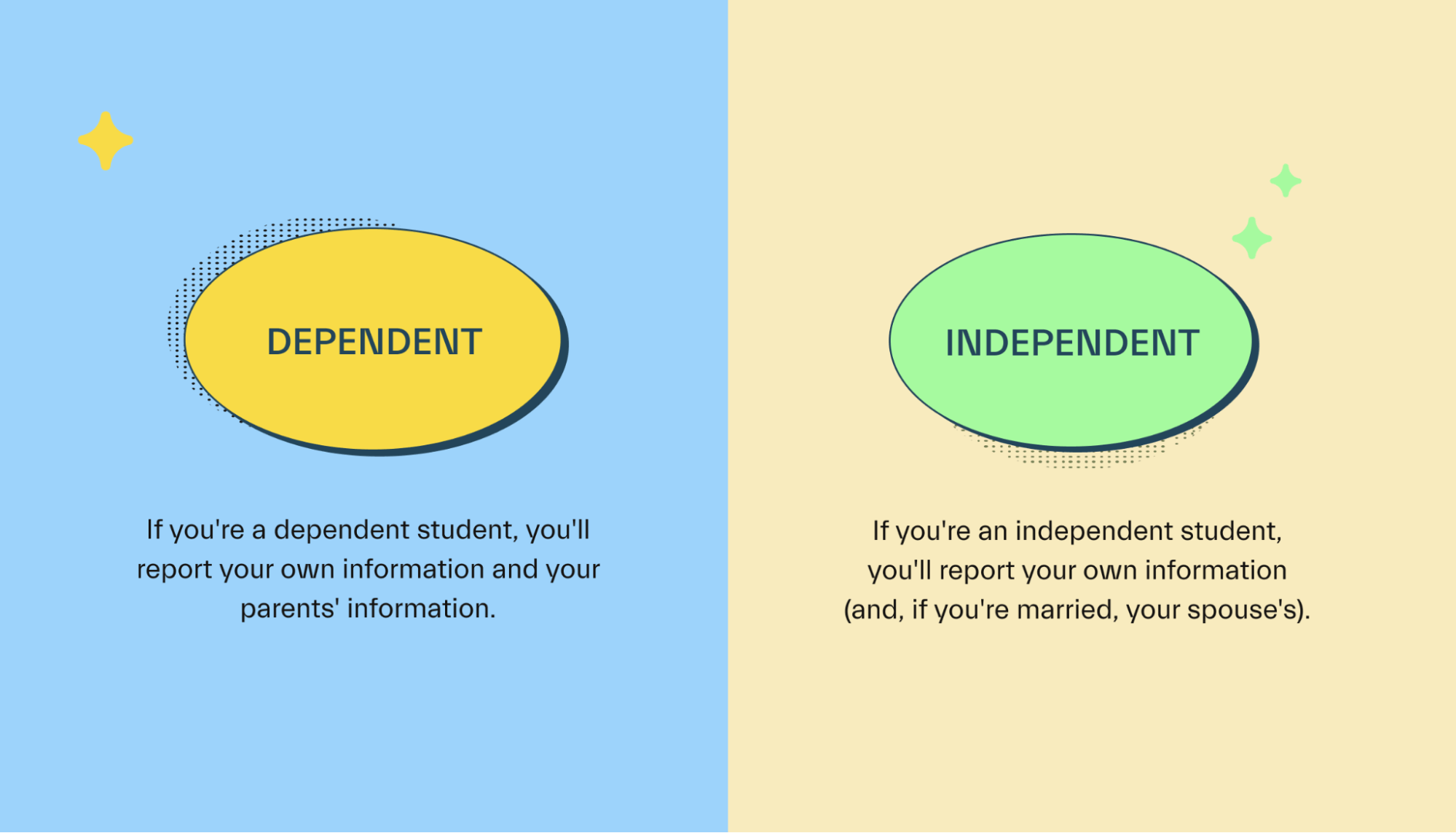
For financial aid purposes, FAFSA classifies students as dependent (parental income considered) or independent (only the student's income and assets count). Most students under 24 without special circumstances are classified as dependent.
You're automatically independent if you're 24 or older, married, a veteran, a ward of the court, or have legal dependents. Independent status often qualifies students for more need-based aid since only their own (typically lower) income is considered. If you believe your circumstances warrant a dependency override, contact your school's financial aid office to request a professional judgment review.

First-Generation College Students
A first-generation college student is someone whose parents did not complete a four-year degree. First-gen students bring unique perspectives but may face additional challenges navigating the application process without family experience to draw on.
Many colleges actively recruit first-gen students and offer dedicated support programs: mentoring, bridge programs, specialized advising, and emergency financial assistance. Identify yourself as first-gen on applications — it provides valuable context for admissions committees and can unlock additional resources and scholarships. Organizations like QuestBridge, TRIO, and college-specific first-gen programs can be invaluable allies.

The Common Application
The Common App is used by nearly 1,000 colleges. It includes: personal information, family details, education and testing history, activities (up to 10), the personal essay (650-word max), and school-specific supplemental questions. Fill out the shared sections once, then tailor each school's supplements.
Start early — the activities section requires careful thought to present your most meaningful involvements first. The personal essay should reveal something about you that isn't captured elsewhere in the application. Proofread carefully, have someone review your work, and submit well before deadlines to avoid technical issues. The Coalition Application and institutional apps are alternatives at some schools.

Building a High School Resume
A high school resume compiles your academic achievements, extracurriculars, volunteer work, employment, skills, and awards into a single document. While not required by most colleges, it's invaluable for scholarship applications, interviews, recommendation letter requests, and job applications.
Organize your resume with clear sections: Education, Activities & Leadership, Work Experience, Community Service, Awards & Honors, and Skills. List items in reverse chronological order with specific details — include hours committed, roles held, and measurable impact. Keep it to one page, use a clean format, and update it regularly. Give a copy to your counselor and recommenders to help them write more detailed letters on your behalf.
Key Factors When Evaluating Colleges
Beyond academic fit, consider the school's career services strength, alumni network reach, post-graduation employment data, and campus support resources. Look at student-to-faculty ratios, average class sizes in your intended major, and the availability of undergraduate research or internship pipelines. A school's culture — collaborative vs. competitive, diverse vs. homogeneous — will shape your daily experience.

Leveraging Alumni Networks
A strong alumni network provides mentorship, internship connections, job referrals, and lifelong professional community. Research alumni outcomes in your field of interest. LinkedIn can reveal where graduates work and how they progressed. During campus visits, ask about alumni engagement programs, career networking events, and mentoring opportunities.
Some schools have regional alumni chapters that host events, informational interviews, and admitted student receptions. A well-connected alumni base can be one of the most valuable long-term benefits of your college choice.
Direct Admissions Programs
Direct admissions is a growing trend in college admissions (2024–2026) that flips the traditional process: instead of students applying to colleges, colleges identify qualified students and proactively offer them admission. This approach aims to reduce barriers, simplify the process, and reach students who might not otherwise apply.
How Direct Admissions Works
Programs like College Board's Direct Admissions use SAT scores, GPA, and other academic data already in the system to match students with participating colleges. Students receive admission offers without submitting a traditional application. Niche Direct Admissions operates similarly, using profile data to connect students with schools that are a strong fit.
Which Schools Participate?
Direct admissions is most common at mid-tier and regional public universities looking to increase enrollment. As of 2025–2026, hundreds of schools participate through College Board and Niche partnerships. State-level programs also exist — for example, some state systems automatically admit students meeting GPA or class rank thresholds (see the Assured Admission page for details).
What Students Should Know
- Direct admissions offers are typically non-binding — you can still apply to and attend other schools.
- Financial aid is not guaranteed with a direct admission offer — you still need to complete FAFSA and CSS Profile.
- Not all programs or majors may be included in the offer — selective programs (engineering, nursing, business) often have additional requirements.
- Direct admissions does not replace the traditional application process at highly selective schools — it's an additional pathway, primarily at access-oriented institutions.
Continue Your Learning
Explore related topics to build a complete understanding of the application process: Essays, Interviews, Recommendations, Early Application Strategy, Financial Aid.
References:
- What Do Colleges Look For? 9 Ways to Stand Out to Admissions Committees
- Learn What Colleges Look for in an Applicant
- 3 High School Alternatives to AP and IB
- What Looks Good on College Applications?
- The 7 Things That Really Look Good on a College Application
- What Colleges Look At When Accepting Applicants
- Applying to College: Your Counselor's Role
- COLLEGE ADMISSIONS: A PARENT'S GUIDE
- HOW TO CHOOSE A COLLEGE MAJOR
- 4 Ways to Use Alumni Networks When Choosing a College
- What Is a Priority Deadline for College? Is It Important?
- Important College Application Deadlines You Can't Miss
- What is a Priority Deadline? Is this important in 2021 and 2022? (Updated)
- Financial Aid Terms
- Do Colleges Count Unweighted or Weighted GPAs?
- Class Rank and College Admission
- How Important is Class Rank in High School?
- Class Rank: Is it Better to Go to a Competitive High School?
- Pros and Cons of Attending a Private College as an Undergraduate Student
- Private vs. Public Colleges: What’s the Difference?
- Public Vs Private College Pros And Cons
- What Is a Liberal Arts College?
- Liberal Arts College vs. University
- Liberal Arts Colleges vs. Universities: Which Type of School is Best for You?
- Liberal Art Colleges vs. Universities: What You Need To Know
- ARE YOU A FIRST-GENERATION STUDENT?
- What Is a First-Generation College Student?
- First-generation college students face unique challenges
- Breaking Down the Common Application - The College Spy
- A Step by Step Guide to the Common App
- College Setting and Location Matter | CollegeData
- How Much Should Location Matter In Your College Decision?
- Geographic Diversity and College Admissions
- Does It Hurt To Be From New York? Geographic Diversity In College Admissions
- Geography Matters
- Close to Home: How Much Does Location Matter in College Recruiting?
- How Your Hometown Could Affect Your College Prospects
- Urban vs. Suburban vs. Rural Universities
- Study in the US: Should I Attend a Rural, Suburban or Urban University?
- College Comparison: Urban Vs Suburban Vs Rural College Campuses
- Campus Setting: Rural, Suburban, Urban
- Should I Go to a Rural, Urban, or Suburban College?
- Dependent vs. Independent Student: Which Are You?
- How Do You Know If You’re An Independent College Student?
- Declare Yourself Independent for Financial Aid
- Top 7 Reasons Why College is Important
- The value of a college education
- Benefits of Earning a College Degree
- How to Write a Resume for College Applications
- How to Write a High School Resume for College Applications